Saturday, 30 March 2013

Self Help Group - 1-year Celebrations in Shenny

Self Help Group - 1-year Celebrations in Shenny - Mar 2013

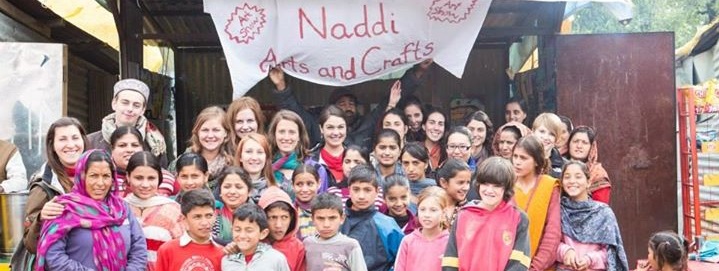
The Naddi SHG and international interns celebrate together.

Self Help Group is a financial organization of a Womens Association based on mutual support both for community based supplementary financial as well as social needs. Each of its members saves a small amount of money each week or month, which is gathered in a common “bank”. This in turn encourages savings, and can provide its members with small loans at a reasonable interest rate for business purposes or in times of financial distress.


Self Help Group in Shenny was started with 16 women in April 2012. They all contributed to the SHG by giving 50 Rs each month during the course of a year. At the end of March, they reached an amount of Rs 9.600. To celebrate this first year of success, the organization decided to add RS 400 to the SHG to achieve Rs
10 000. After one year, the women are still motivated and have decided to use this money to create and set up new income generating activities.

The aim of this first year was to collect the money and keep it in the group managed informal "little SHG bank”.


The objective of the second year is to continue to collection of money, but also to create new business opportunities through loans funded by their own "little SHG bank” . Thanks to the profit made with these projects, they will also be able to pay their initial loan back.

End of the 1st Year Celebration:


To celebrate the success of the Self-Help Group in Shenny we decided to organize a “picnic” with all of the women involved in the SHG, and volunteer-interns in EduCARE India and its affiliate programs / orgs. After a quick presentation to go over the trajectory of the SHG, we honored all the women individually for their active involvement and contributions toward the SHG.  The women were very happy and proud to be complimented for their work.

By the end of the presentation, we proposed some ideas – based on personal evaluations and surveys collected – on how to use this money, and give them the possibility to generate an income. The reactions of the women have been above and beyond our expectations! They were very motivated and enthusiastic. Every single woman participated, and seemed really interested. There was a very positive exchange ideas and dialogue between the women and the interns.

Everyone working together to prepare a delicious Indian meal of puri’s and channa. To finish off this great day, we all shared in the preparation and then later eating of a delicious Indian meal

The Next Phase of the Self Help Group:
How will the women use the money they have collected?
The first project idea involves all of the members in the SHG. The idea is to create a ReStore,  a local shop, in main square of Naddi. In this ReStore, the women will sell their own hand-made products to the local community and tourists. This project will allow the women to earn money independently from their husbands, brothers, and father; and therefore enable them to increase their own economic empowerment and personal self-confidence by giving them the means to contribute to their household income.

In the first phase of production, the women are really interested in producing and selling knitted items, tailored clothes, and local accessories. At the same time they are also highly motivated to learn how to make jewellery and various baked goods. They would then add these items into the second phase of production.
In the next couple of weeks the women will begin their production of these items, and plan to open their shop by May!

Elodie Duvivier & Aureline Moye
Micro-finance interns from France
March/April 2013

Wednesday, 13 March 2013

Sanitation and Waste Management during After School Fun Club!

Sanitation and Waste Management during After School Fun Club!


SWASH police showing way how to sort out and reduce the quantity of trash waste !


Sorting and learning which trash is burnable and not, and why

After School Fun Club has continued to focus once a month on SWASH (Sanitation of Water, Air, and Soil for a Healthy Village) project. During this activity, we teach the children how important waste management is, and how dumping trash or burning plastic and other mixed waste can be detrimental to the local environment and their health. This week, we organised another trash sorting / classification workshop with the kids of Shenny with participation of Sara and Melissa from EduCARE India team in the lead. The kids in Fun Club have started to get more aware of this initiative and would hopefully further sensitise others (their family members and the larger community in the village) to dispose of their trash in a responsible manner.

Friday, 1 March 2013

Starting of a Girls Club in a new village

After the success of the Girls Club and Young Women’s Association in Naddi, our volunteer-interns team is working to start up a new group in Himachal Pradesh village cluster at Maitee. As new international volunteer-intern members, the team-members had moved to Maiti at the end of January, 2013 to help initiate this new project.
Naina, Kate Davis - Canada (Girls Club and YWA Project Manager),
Laboo, and Auréline - France (Micro-finance Project Manager)
Since moving to Maitee they (Kate, working with our affiliate YWI; and Aureline working with affiliate MicroEmpowerED program) have spent the majority of their time getting to know the women and children of the community. Kate, from Canada remarks, "At first I was intimidated by this task because there had been no previous interaction with these families and I was worried as to how they would receive my presence in their village. After some casual visits and many cups of chai my worries soon vanished as I got to know the families.  Up to this point, there are about 15 girls with whom I regularly interact that range from the age of 6 to 20. The older girls have been helping me learn some Hindi and I help them with their English when I can. The children are so happy to teach me about their way of life in Maiti and they especially enjoy it when I dress in the traditional Indian Salwar Kameez outfit, saying that I look “Oh! SO nice!”." 
            In the next few weeks, the team has started to organise a room in the near vicinity of the intern house to use it as a common get together and activity room. A classroom at the local elementary school is also being put into use..The team-members will not only be able to assist the teachers with the English curriculum during school hours, but they will also teach skills for community based waste management and good case practices for environmental conservation amongst the children. In the afternoon they would be able to conduct Girls Club and After School Program activities. For Girls Club, the girls have shown a great interest in learning various life skills and practicing English. They have also said that they would like to do arts and crafts as well as organized team sports on the field out back.  We look forward to seeing these activities come to fruition in the next few weeks, and, support Aureline (from France) towards initiating a Young Women Association and Self Help Group there!

Main Road Square of Maitee village
A lline of houses of the marginalized and poor lie (beyond visual sight) behind the trees on the right extreme

Thursday, 28 February 2013

Our Chicken Coup - A successful model

Chicken Coup 

One of the first projects of micro finance in Naddi was the Chicken coop started by Cecile from france with the support and help of the EduCARE India staff and local partnership of Lata during her international internship program in Middle of 2012. The initial concept was to have a henhouse with chickens and roosters to produce eggs that can sold. The main goal of this project is to help a local woman become more economically independent and self-sufficient. With this project, she can sell the eggs, make a high profit and save the money they would have otherwise spent on buying eggs from the market.

The project started on 21st August 2012, with the arrival of 25 chicks, 19 hens and 6 roosters to the community. The animals arrived courtesy of EduCARE India  - ViKAS Centre - Young Women’s IDEA efforts and MicroEmpowerED’s loan to Lata. After 6 months the hens began to lay. In the beginning we found only one or two eggs per day, but as time went on the hens started to lay more eggs with increasing regularity. Around the 10th march 2013 Lata sold their first eggs. She decided to sell the eggs to the other families in the community. It has been easier for her, and the community is happy to consume eggs from a local, free range production.

Making a new chicken coup for the laying hens >>

Two months after the first egg, after the business has become fully established in the community and has proven to be lucrative, Lata will start to refund the loan for the initial investment. We decided together to apply a 0% interest for the loan. In fact, we aim to apply integrated microfinance, meaning that the returns for the loan will be reinvested into other social empowerment and micro-finance projects.

Elodie Duvivier
Micro-finance intern
France – 2013

Wednesday, 5 December 2012

Education will lead to empowerment of Migrants community in Janauri village

Education will lead to empowerment of Migrants community in Janauri village

On the outskirts of Janauri village lies a small migrant camp that has all to often been overlooked by the Indian society. The cast system does not only limit access to basic provisions but also stifles children’s opportunities to dream to strive for a better way of life. Many children here are unable to comprehend that they can improve their lives, as they do not know any different. Through education the prejudice from society can be challenged, and the children can attempt to break free from the societal pre-determinations of how they should live their lives.

Learning English improves the children's self esteem

Education can lead to empowerment. This is our firm belief at EduCARE India and can be seen on the ground in Janauri. Currently the 4 interns as part of EduCARE India's international internship programme undertaking their volunteer work in India providing basic English and Math’s classes which Erica Vass from US and local beneficiary group believes will “serve them well into their adult lives”. These skills taught to the children will aid them in basic money management and also allow them the opportunity to compete for more jobs in the future. The classes currently are running twice a week and according to Erica are “of the utmost importance in terms of promoting empowerment for these children.”


The children are highly attentive during lessons and always enthusiastic. Currently the children receive 2 after-school English lessons a week, however this number may improve due to the demand for learning. The children’s willingness to learn in the migrant camp is staggering. Despite having significant other concerns such as access to basic amenities they are still determined to learn and we are therefore determined to teach.

Learning through games

Education therefore is being used as a tool of empowerment that can result in long-term tangible benefits for the migrant children in Janauri. Sydney J. Harris stated that the whole purpose of education was to turn mirrors into windows and this can be seen through the work in Janauri. Rather than the migrant children assessing their limitations and believing they cannot improve their lifestyles, education shows them what they can achieve.

Sunday, 11 November 2012

One of the important components of our projects are the health care and wellbeing of marginalised, poor, adolescents and women. Like many other developing countries, India too has several need gaps related to health care education and facilities. As India undergoes a transition from tradition medicine to modern medicine, there is an increasing lack of awareness of health issues and lack of access to health care facilities in many rural areas.

21 year old Jenny Bird and Kathryn Kaintz, both from the USA, and Kirsty Major from UK have spent the last several months initiating various projects in our Dharamashala cluster to address some of these health care issues at the grassroot level. "We have incorporated a few project activities aimed at addressing these need gaps, and to get to know and understand the health needs and concerns of the community better." 
Jenny Bird conducting health surveys with some of the community women
Some current and past health care project activities include: 
  • Community health care surveys to assess the health care issues and level of health care awareness in the community;
  • Adolescent health care awareness workshops in schools;
  • Nutrition, hygiene and wellbeing workshops during our Girls Club and Young Women Association meetings;
  • Connecting with the local public health care facilities including the traditional Ayurvedic hospitals to try to create good linkages with the rural communities, and; 
  • Community sanitation and waste management education and activities. 
  • Annual medical check up and record-keeping for the marginalised migrant community

Medical health camp with the migrant women

Wednesday, 10 October 2012

Monsoon rains help our organic kitchen garden

Our organic farm 
It has been monsoon times in Naddi. Through September, the drops of water did not stop, and had cut the sun’s time to shine to 5 minutes every once in a while. Rainbows did not miss that opportunity to show up and add up to the already colorful village in the Himalayas.


Rainbows sneak in when rains stop for a minute

Clouds came and went around the surrounding mountains: sometimes a small cloud sat in between the hills, like a giant marshmallow, while some other times, these gas formations managed to hide entire mountains. Humidity and moist became the daily weather forecast. Clothes got endlessly wet, umbrellas the essential accessory for the season, and at night, the outside lights from the houses magically lit up the mist.


Organic farming

India depends on the monsoon to feed its ever-growing population, that reaches more than 1.160 million people now. While most of the country is dry and hot the rest of the year, non-stop monsoon rains through June to September provide the crops with just the right kind of climate to grow: at least 55% percent of India’s land depends on these rains, due to the lack of irrigation systems.


                                      Local organic cucumbers and beans

And although this year’s monsoon India had suffered from lack of rains in the initial phase but caught up so,me of the deficits in September. The late rain lead to difficulties for the population that saw how their crops withered before growing.

Initiatives like our kitchen organic farms aim to help sustaining villagers food production capacities. The motto is simple: why buying vegetables at the shop if you can grow your own? The first cucumbers, beans, carrots and pumpkins have grown and have been enjoyed by our community.
Bobby holds the first vegetables from the organic farm